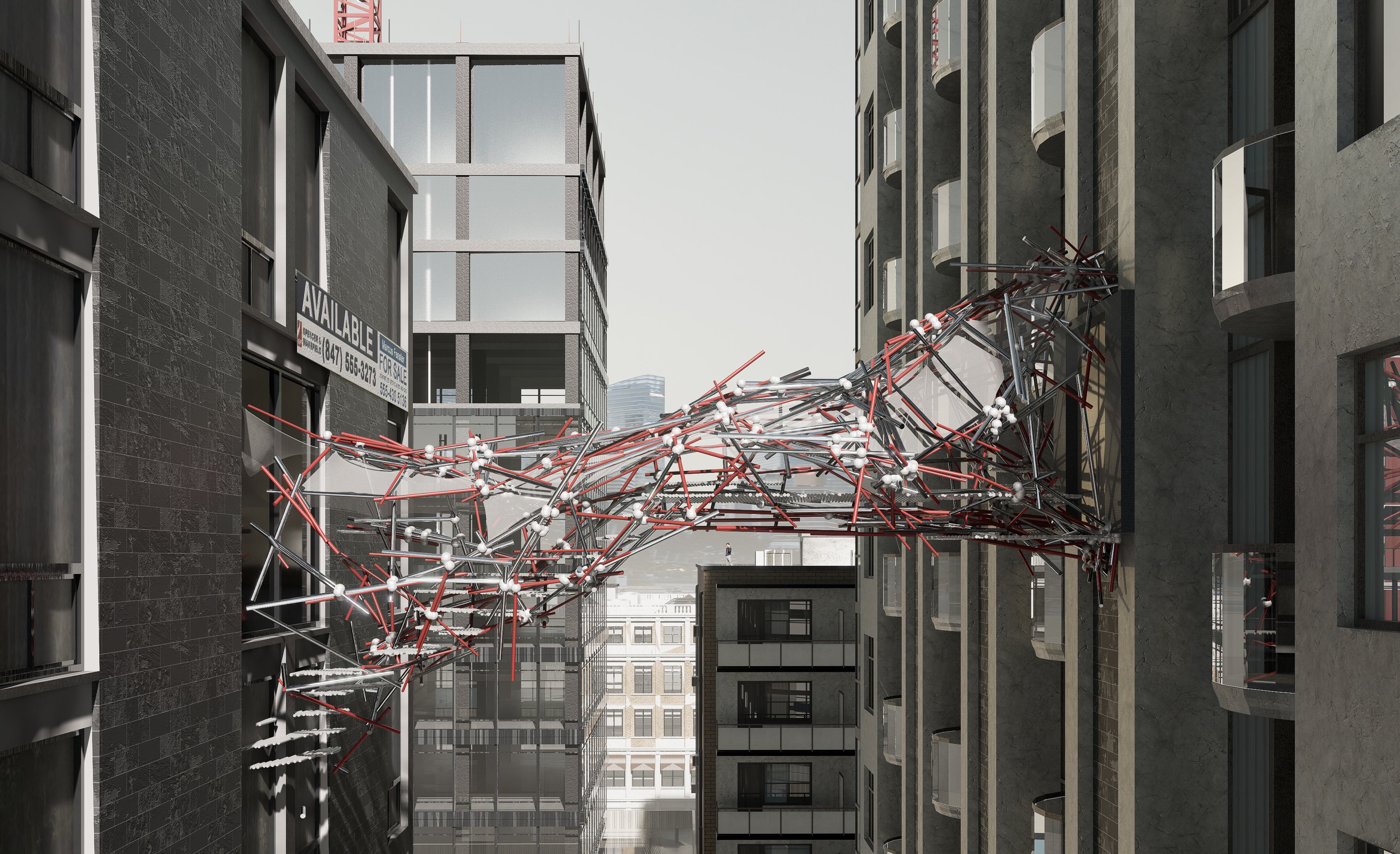
HOLOLAB
Architecture Generation Driven by AI Digital Product
Year
2025.09.23
Location
London
Overview
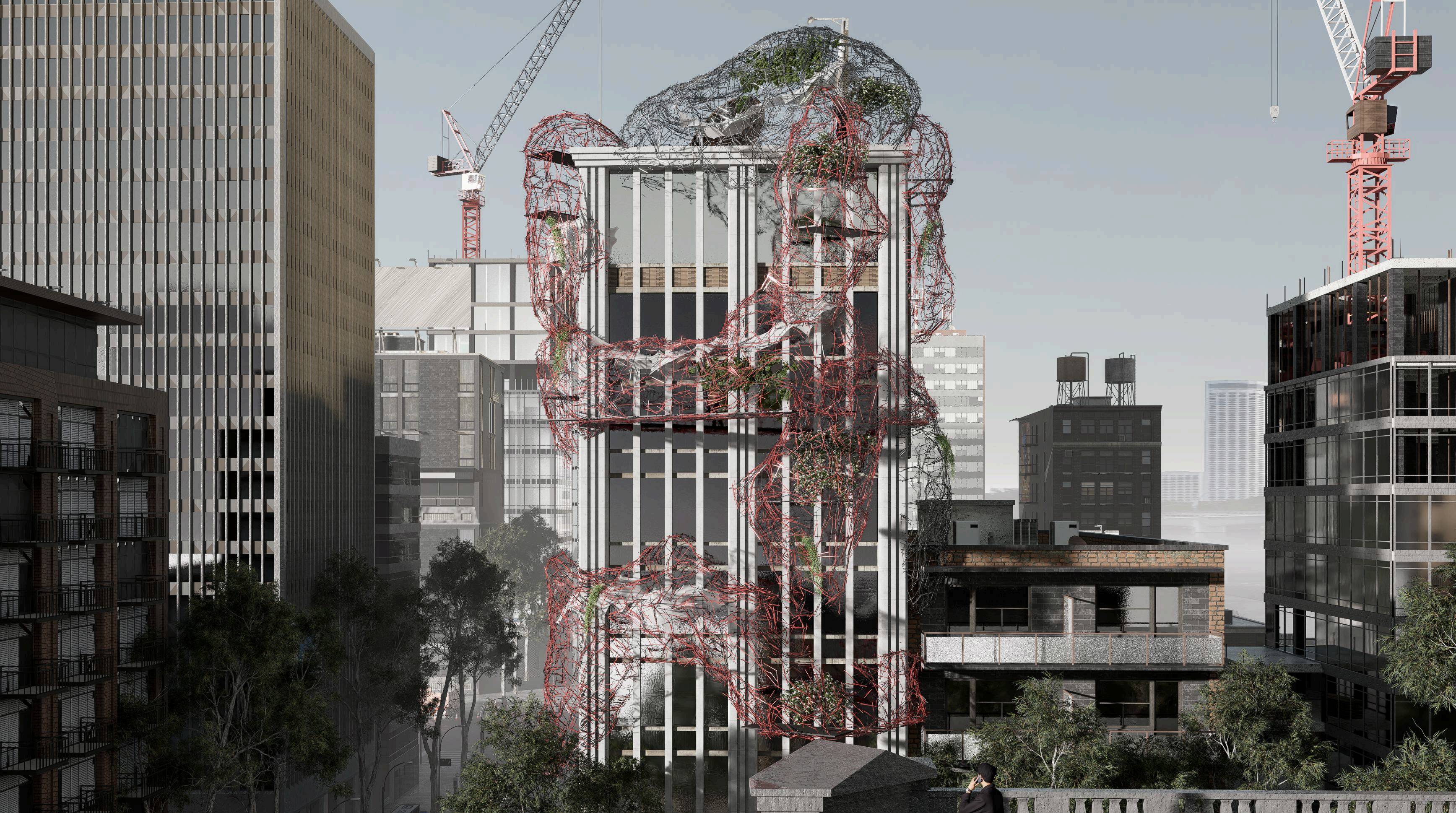
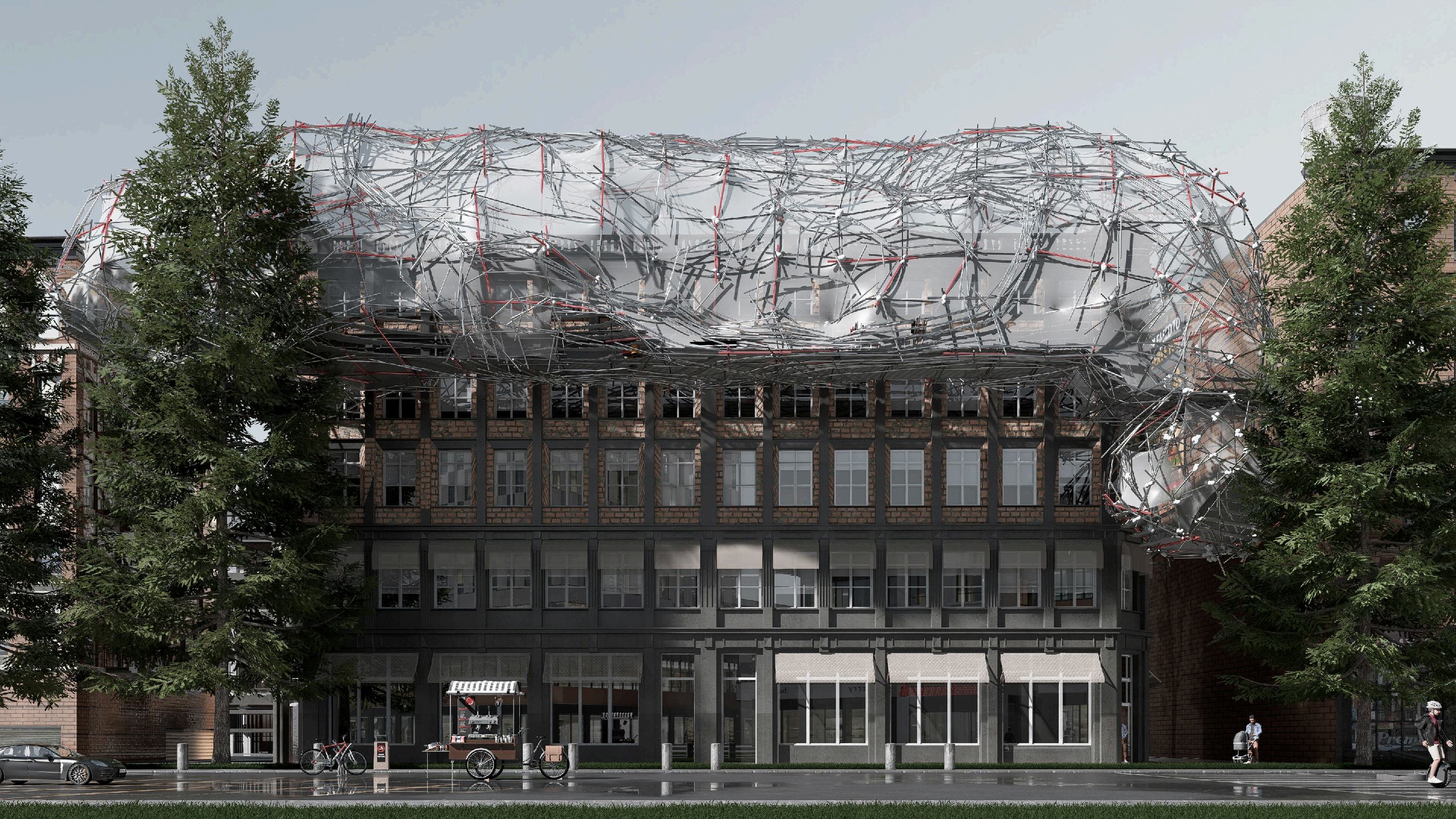
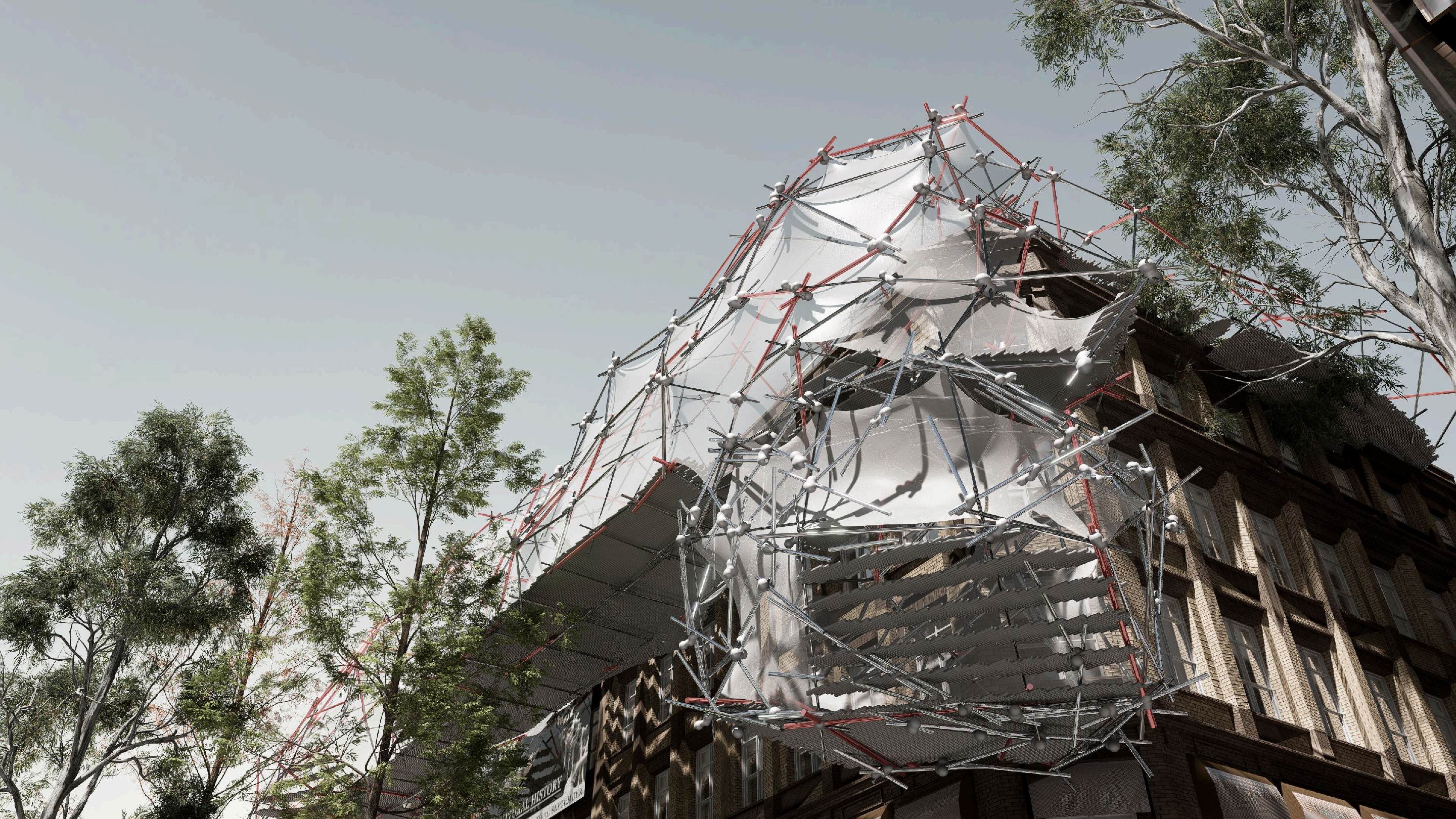
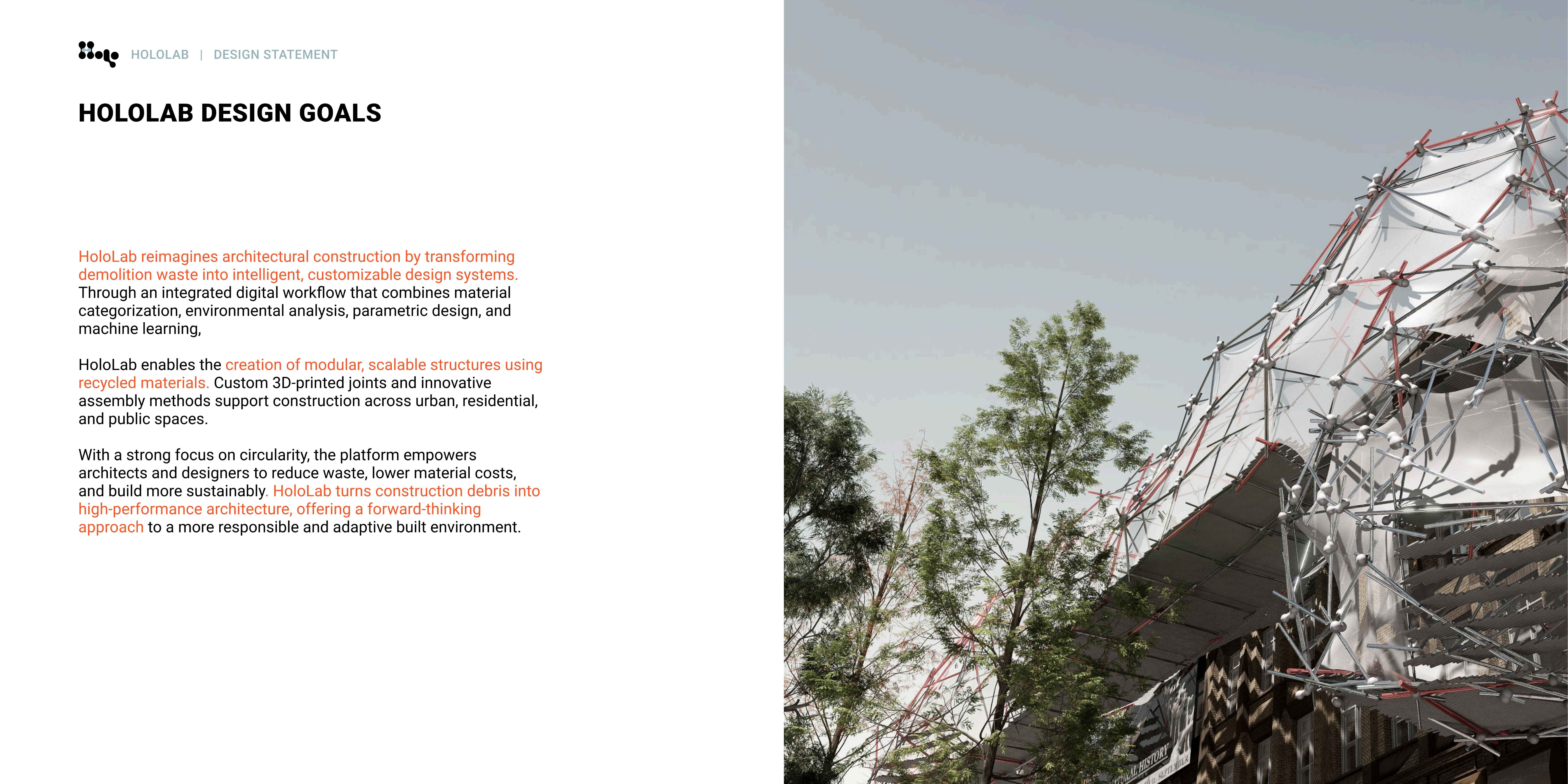
HoloLab is an experimental research project exploring the intersection of digital tectonics, artificial intelligence, and the circular economy. The project challenges architecture's long-standing reliance on "standardized materials" by proposing an adaptive design workflow for decommissioned industrial pipes. By transforming random, discrete physical waste into computable digital assets, HoloLab establishes a dynamic spatial generation system that responds to authentic user needs.
Personal Manifesto
I believe the future architect is not merely a creator of forms, but a designer of "interaction rules."
Technical Architecture: From Semantic-Driven to Spatial Evolution
The project achieves a direct mapping from "human intuition" to "complex geometry" through the following technical pipeline:
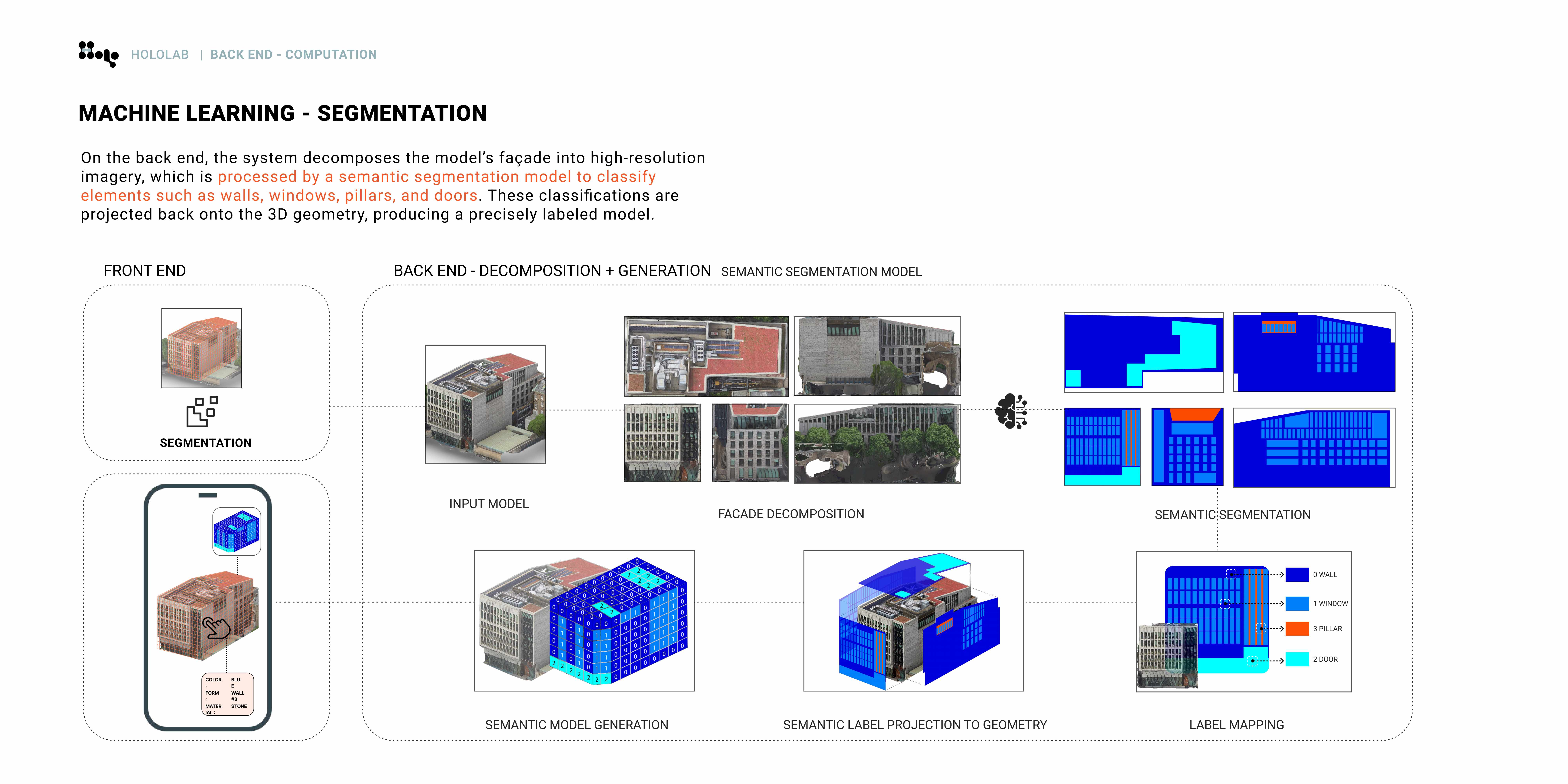
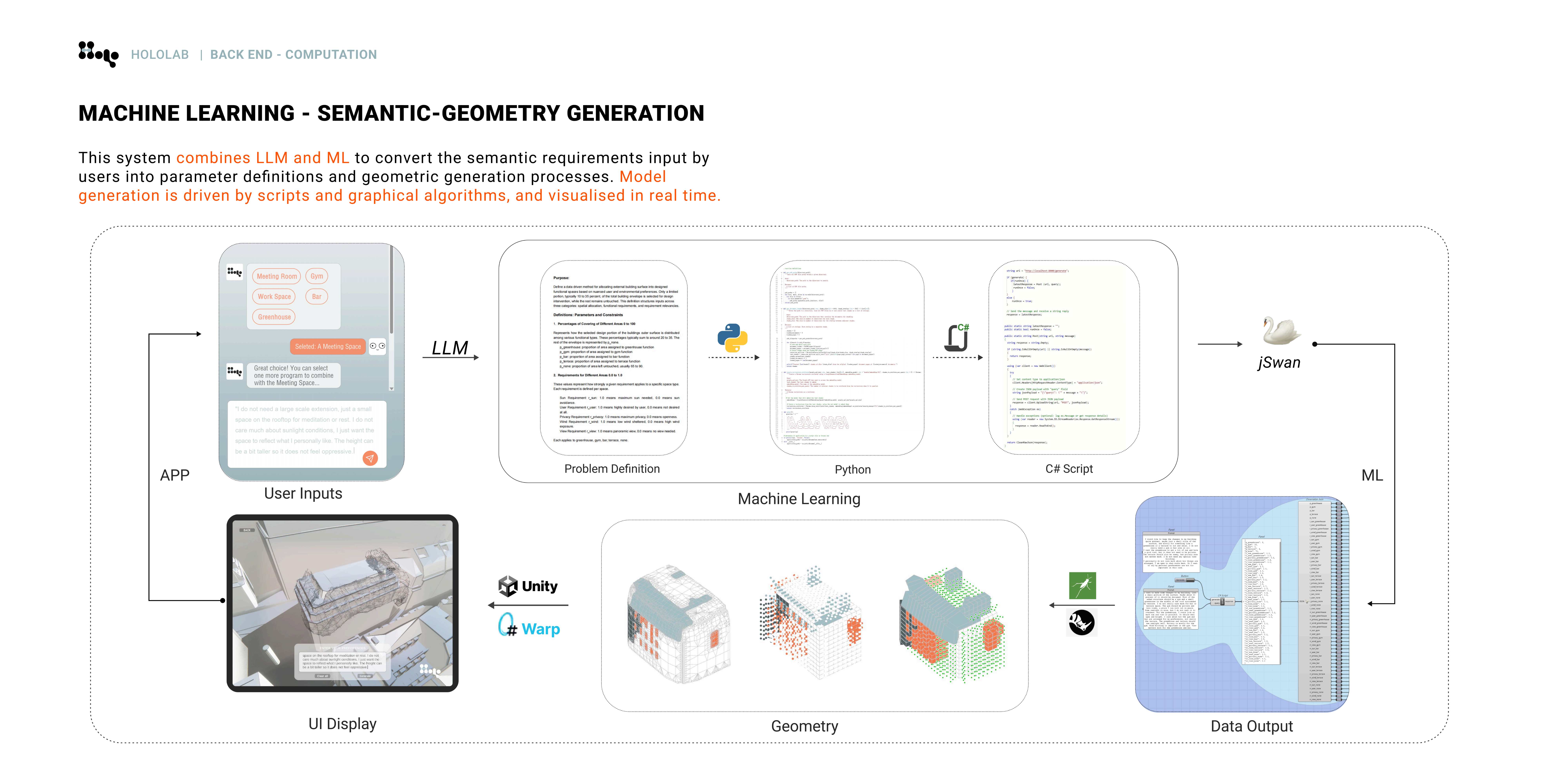
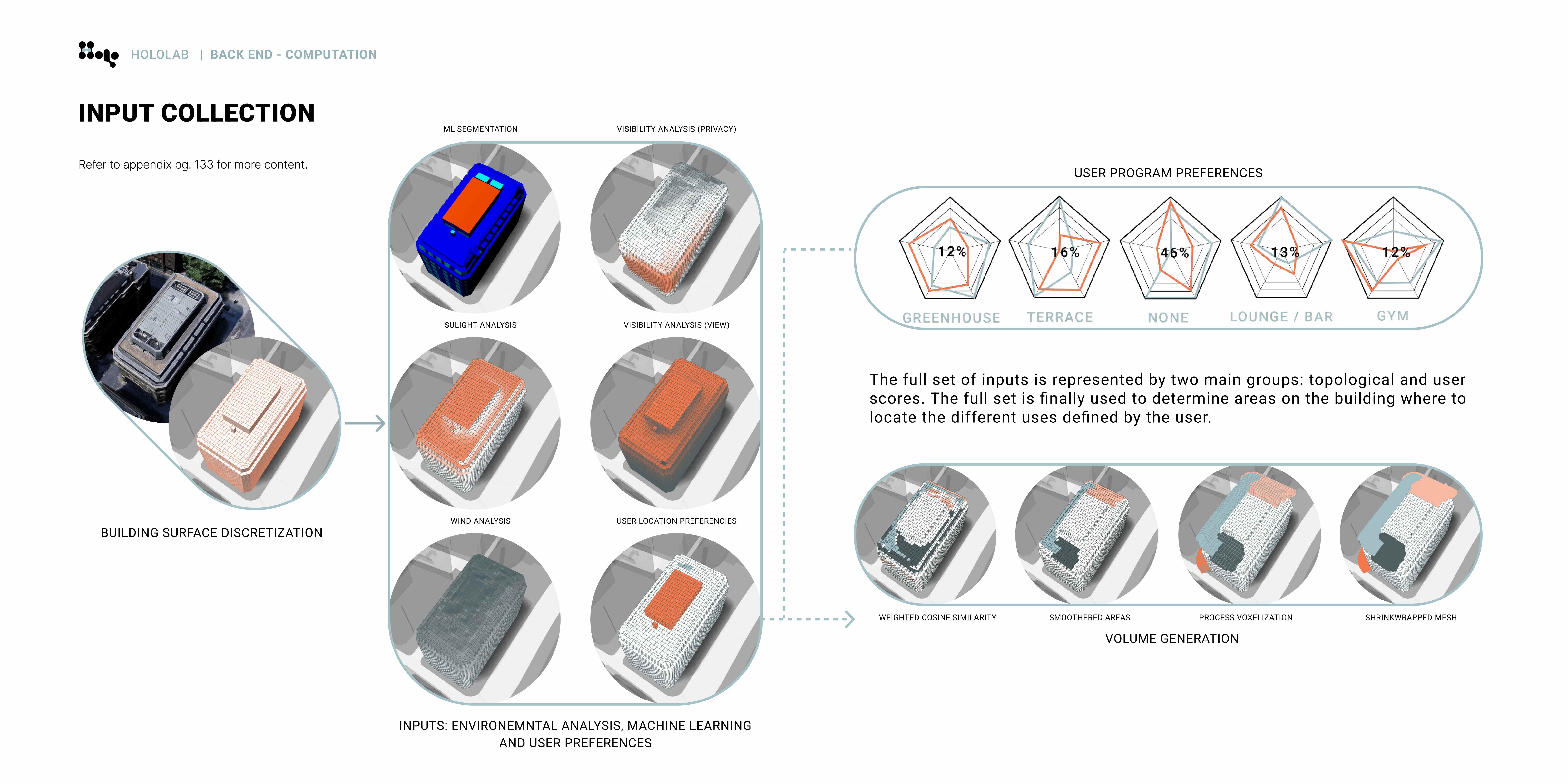
- Semantic Translation Front-end (NLP to JSON): Utilizing Machine Learning (ML) models, the system parses natural language inputs from users—capturing preferences for spatial privacy, illumination, or functional distribution—and translates them precisely into structured JSON data streams.
- Adaptive Parametric Engine (Data-Driven Grasshopper): Within the Grasshopper environment, I pre-defined a set of highly flexible geometric logics and spatial partitioning algorithms. The JSON data serves as the underlying driver, modulating form curvature, subdivision density, and component distribution in real-time. Consequently, the resulting space is not a random generation, but a "precise projection" of user intent within a pre-designed architectural framework.
- Real-time Interaction & Integration (Unity & AR): The Unity engine serves as the hub for visual integration. Users can witness the data-driven morphological evolution in real-time within the Unity environment. Simultaneously, the system utilizes Augmented Reality (AR) to translate complex, non-standard assembly sequences into intuitive, visualized construction guides.
Architectural Significance: Adaptive Cycles
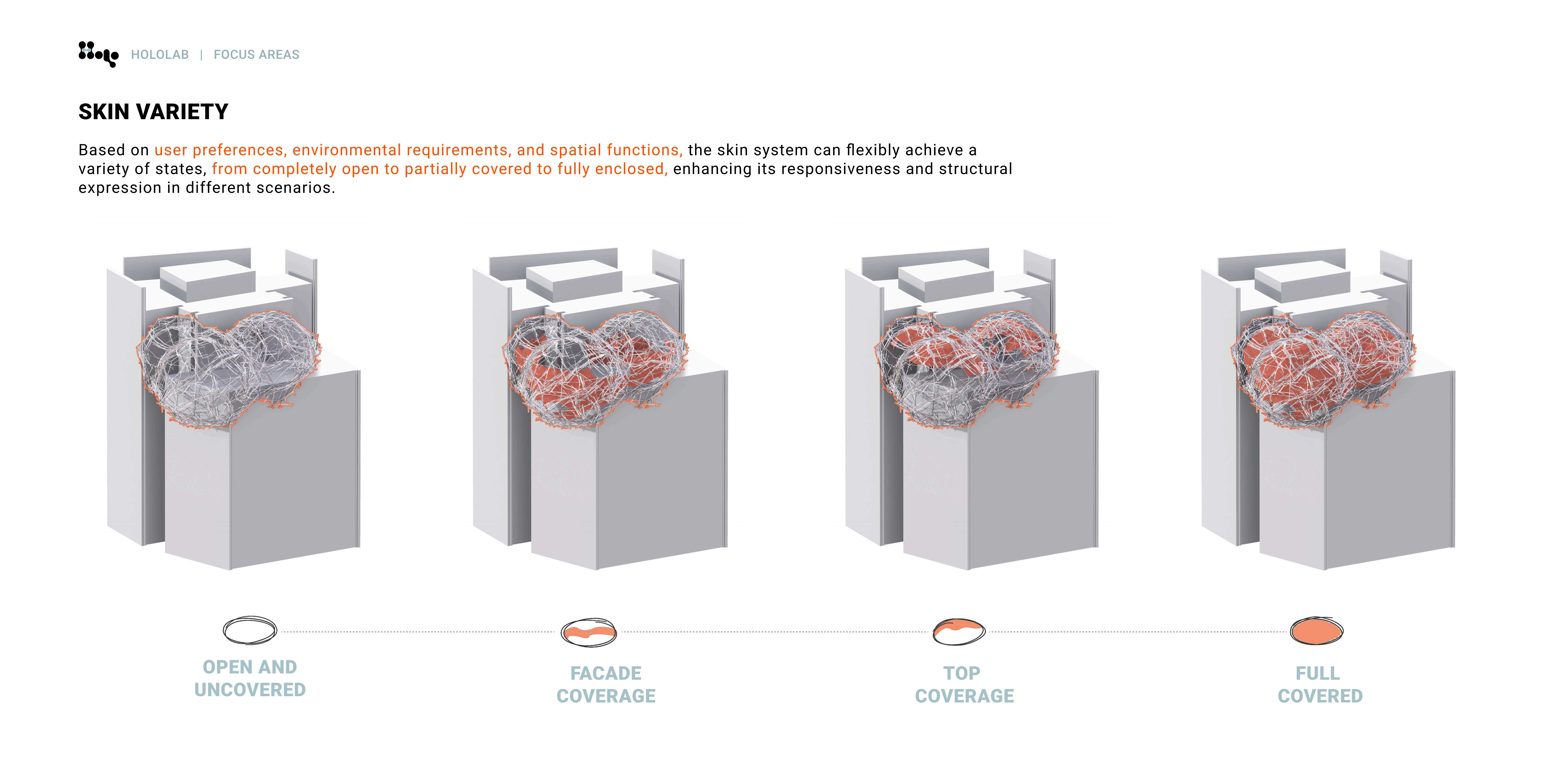
HoloLab redefines discrete industrial waste as a dynamic tectonic resource. Through this AI-driven design workflow, architecture gains the capacity for real-time morphological optimization based on diverse scenarios and user feedback. It offers a new paradigm for sustainable architecture that balances "technical rigor" with "emotional interaction."
Project Documentation