Anshan Iron and Steel Factory Renovation
Sustainable natural materials parasitizing industry
Year
2023.05.07
Location
Anshan
Overview
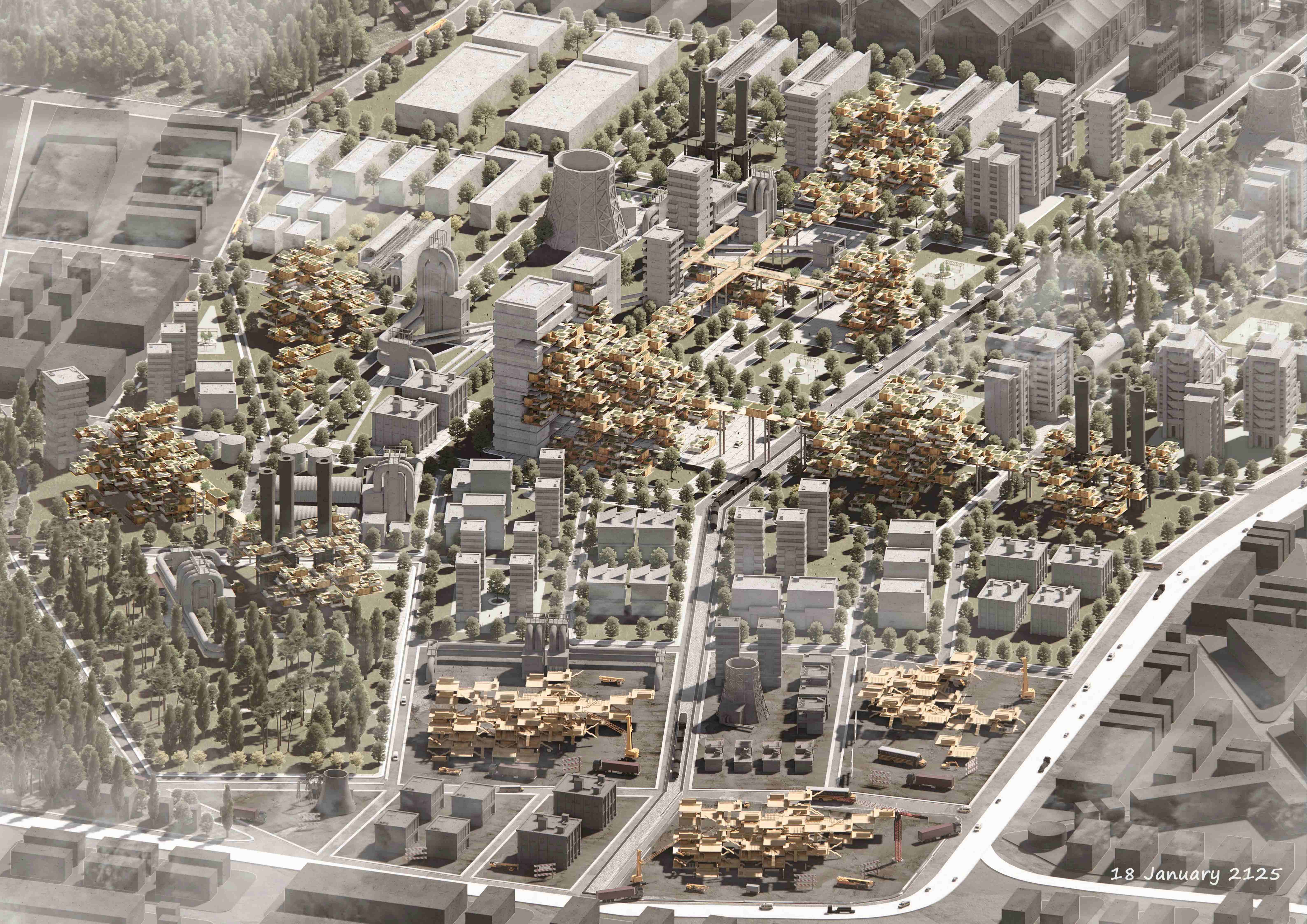
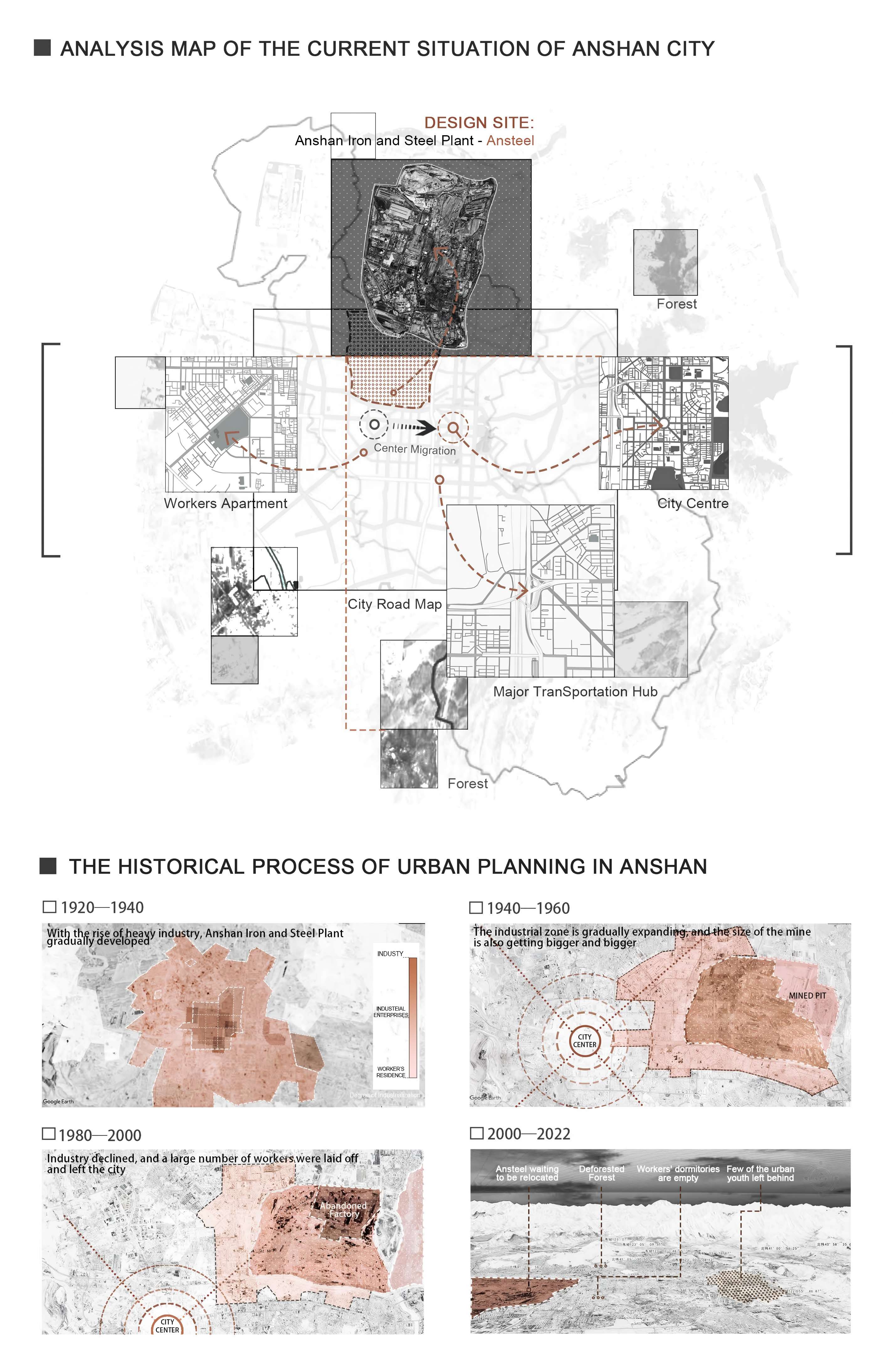
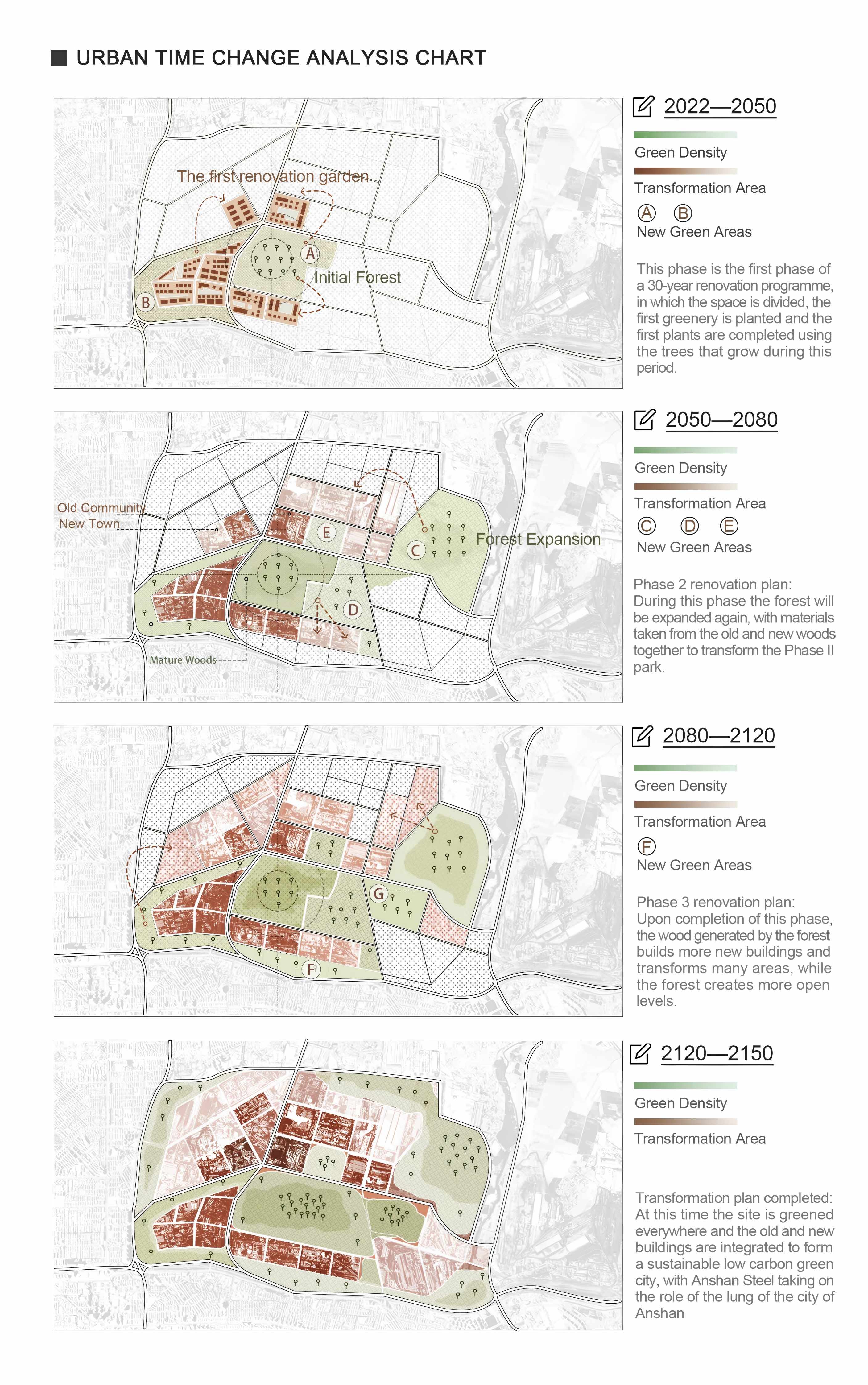
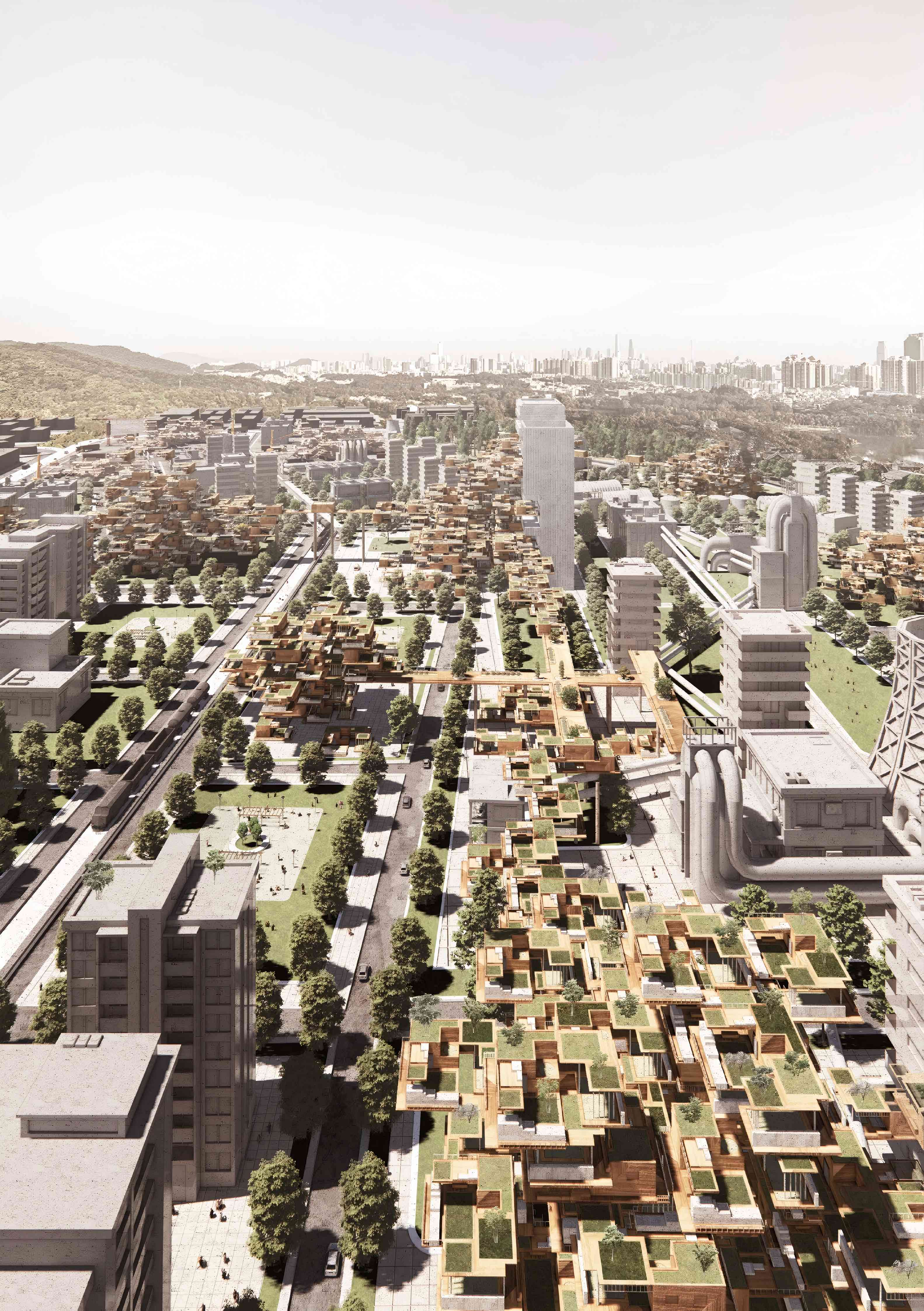
This project focuses on Anshan—China's historic "Steel Capital." Addressing the environmental decay and social challenges brought by industrial decline, the design proposes a century-long Ecological Succession model. Moving beyond instantaneous completion, the plan utilizes the introduction and growth of forests to transform cold industrial skeletons into a "Steel Lung" that breathes with the city, achieving a radical metamorphosis from a source of pollution to a carbon-neutral ecological core.
Sustainability Strategy: A Century-long Cycle
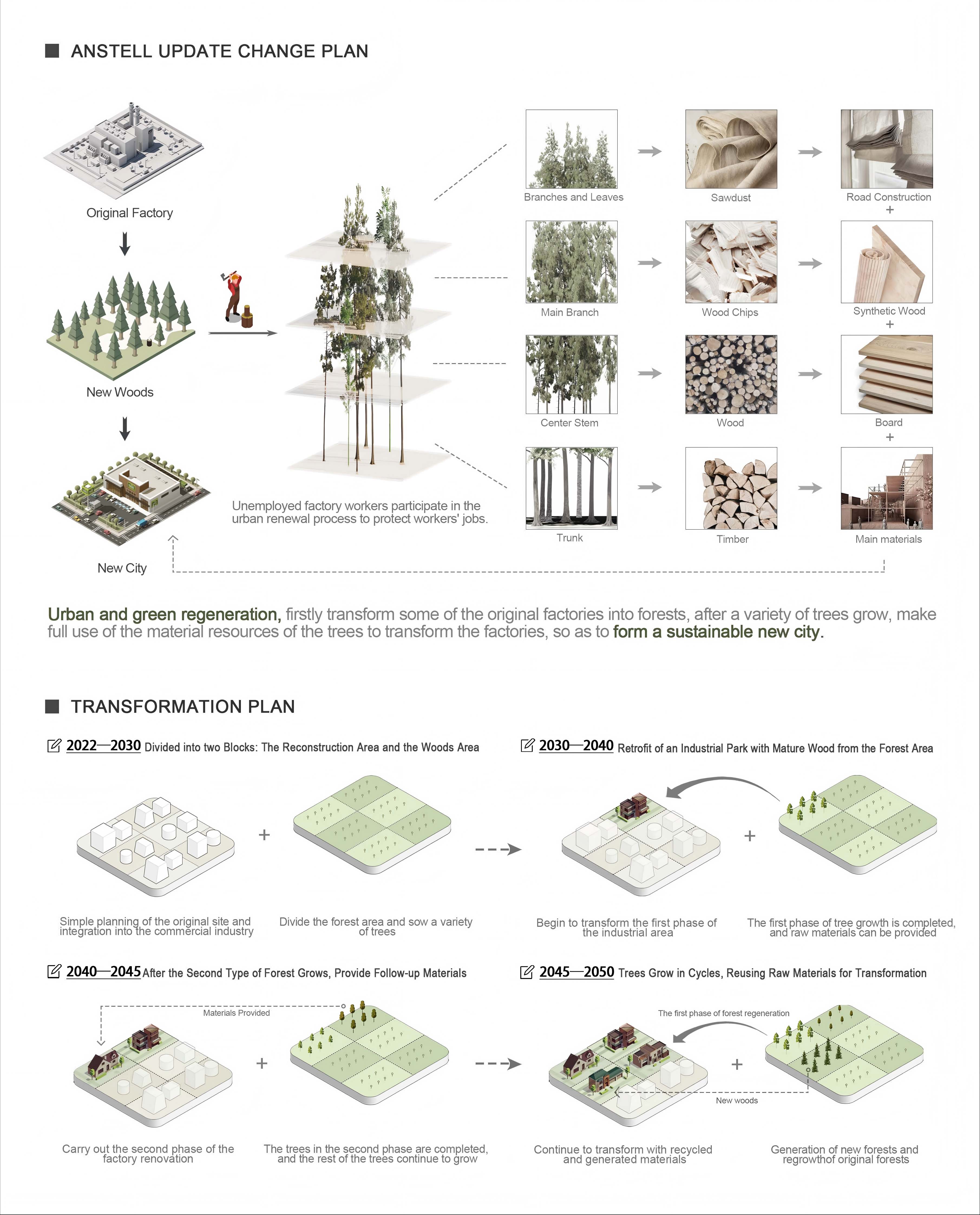
- Ecological Restoration & Urban Lung: Utilizing a forestry system to remediate contaminated land. As the forest matures, the site transitions from a carbon source to a carbon sink, purifying the air and improving the local microclimate for the entire city.
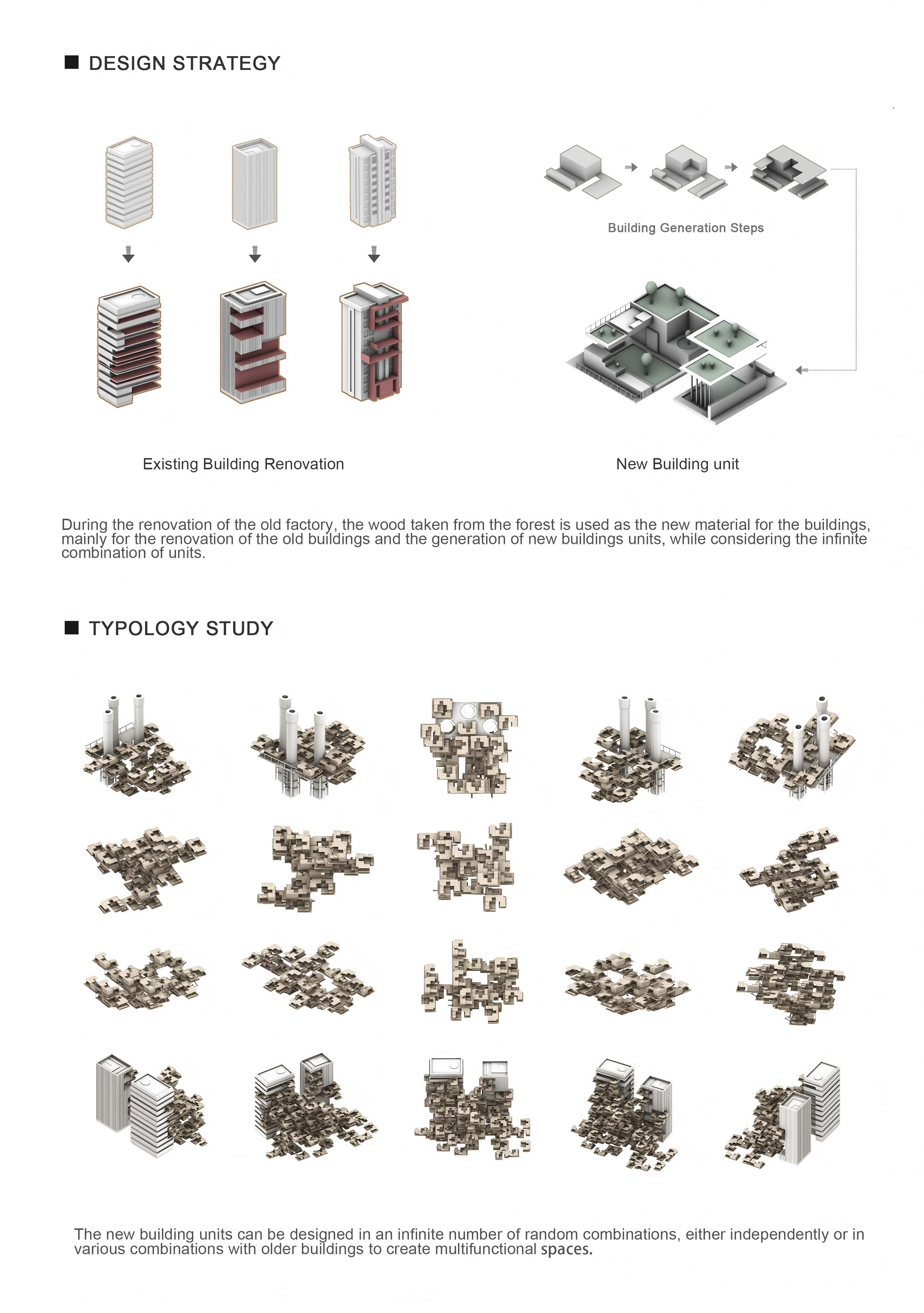
- Carbon-Neutral Material Loop (Site-Grown Timber): The project champions the logic of "Grown on-site, Built on-site." Timber harvested from the burgeoning forest is utilized directly as the primary construction material for renovation, drastically minimizing the carbon footprint associated with material transportation.
- Temporal Evolution Timeline:
Phase 1 (2025–2050): Introducing forestry and initiating fundamental functional shifts within the factory shells.
Phase 2 (2050–2100): Utilizing matured timber for structural expansion and refined architectural interventions.
Phase 3 (2120–2150): Achieving a "Forest-City" model where the original industrial skeletons and new timber structures are fully integrated into a symbiotic ecosystem.
Architectural Strategy: Parasitism & Modular Growth
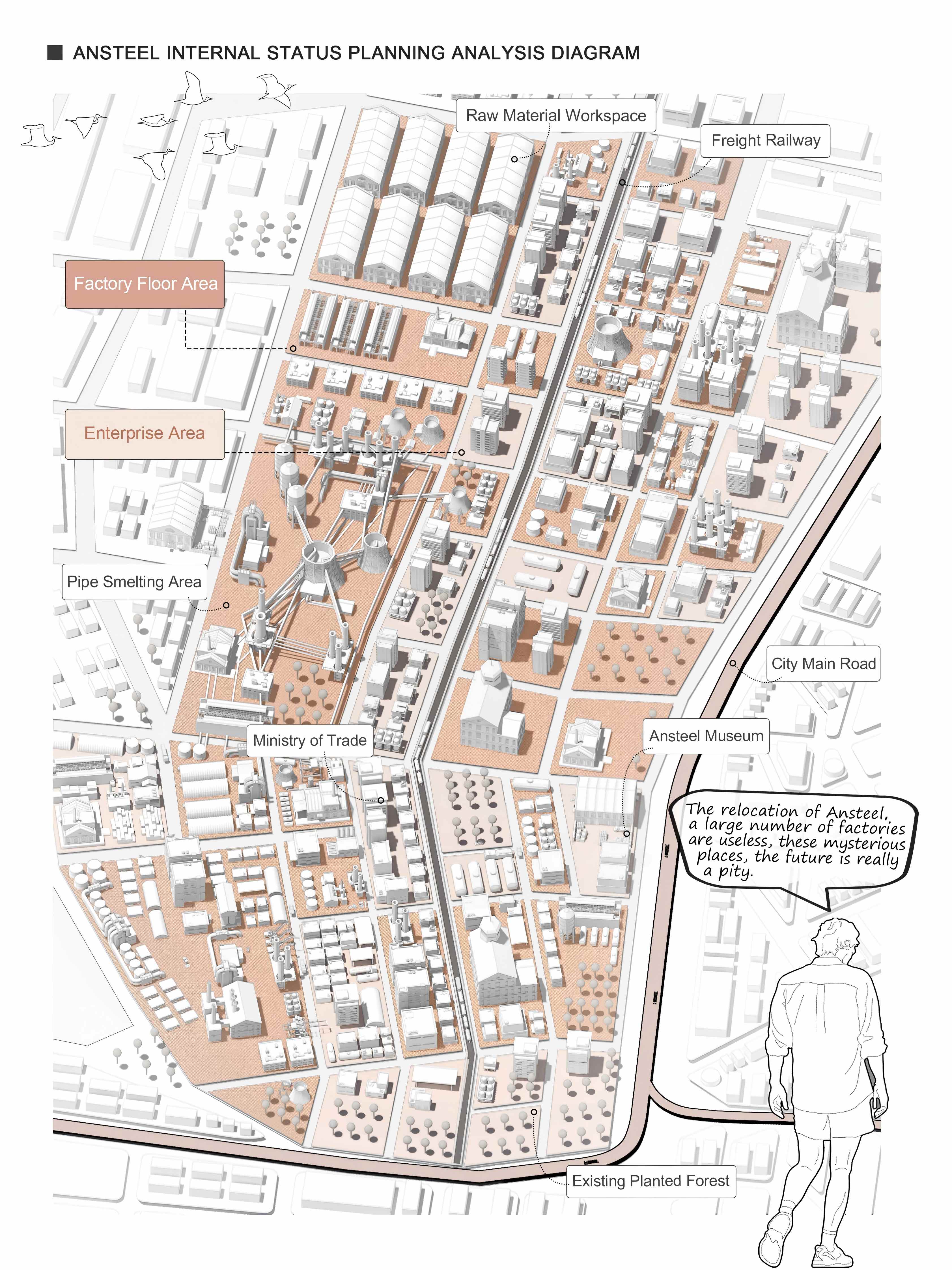
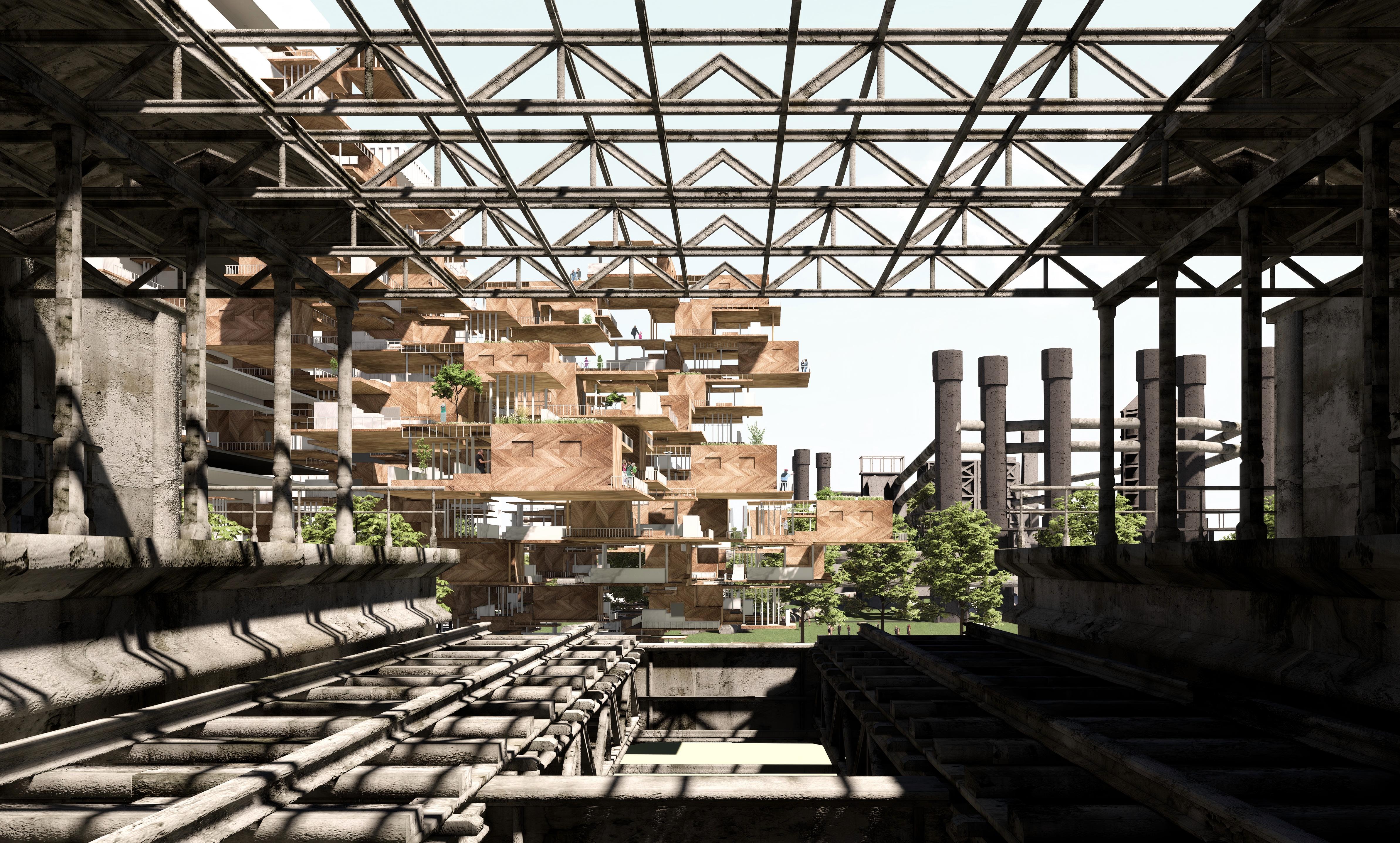
- Heritage Adaptive Reuse: The design preserves Anshan Steel's iconic industrial frameworks—such as cold-rolling mills and blast furnaces—reinforcing them to serve as the "host" for new urban functions.
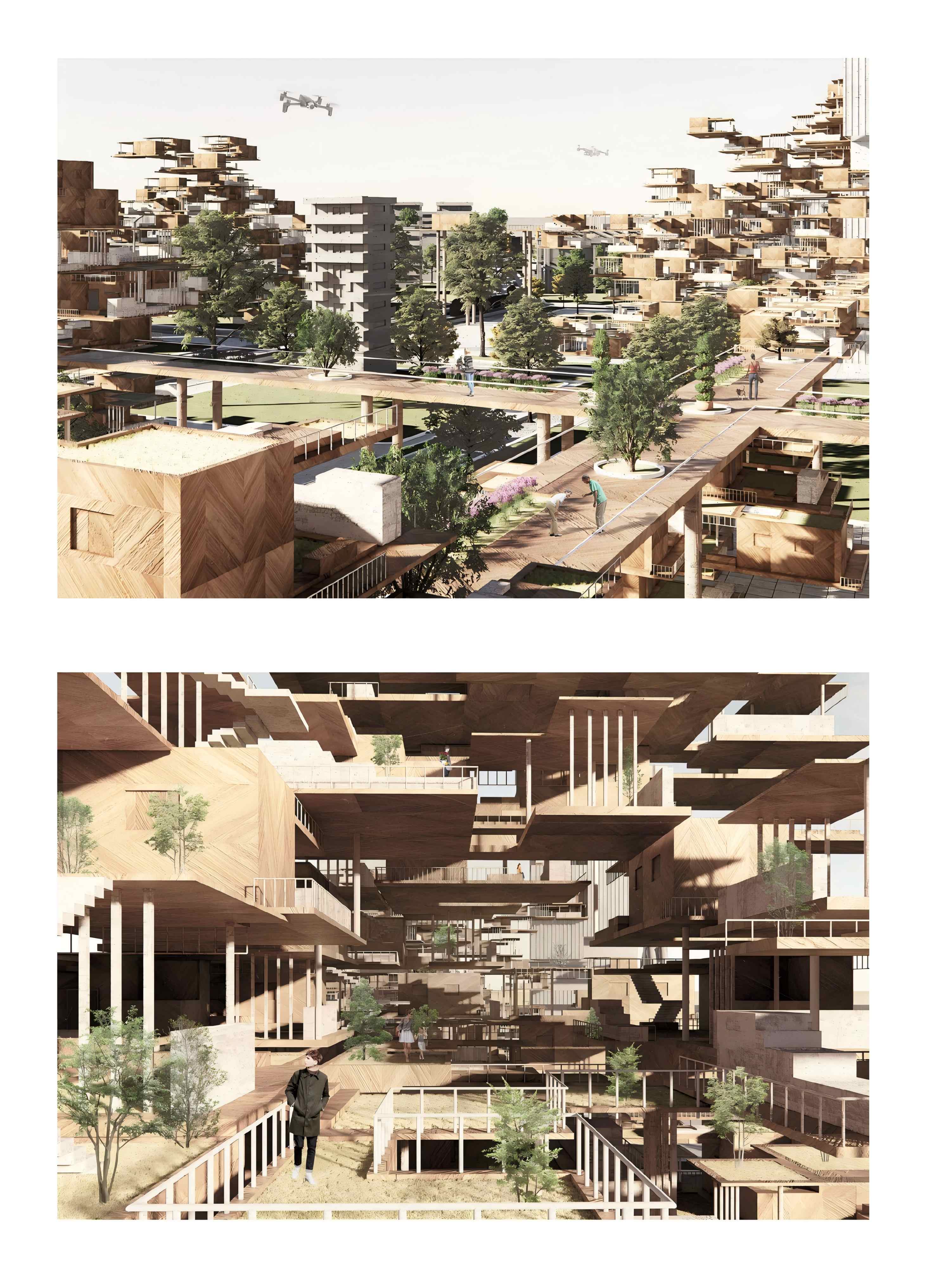
- Modular Timber Units: I developed a system of standardized, high-flexibility timber modules. These units can be combined in infinite configurations based on diverse functional needs, such as galleries, community workshops, or social hubs.
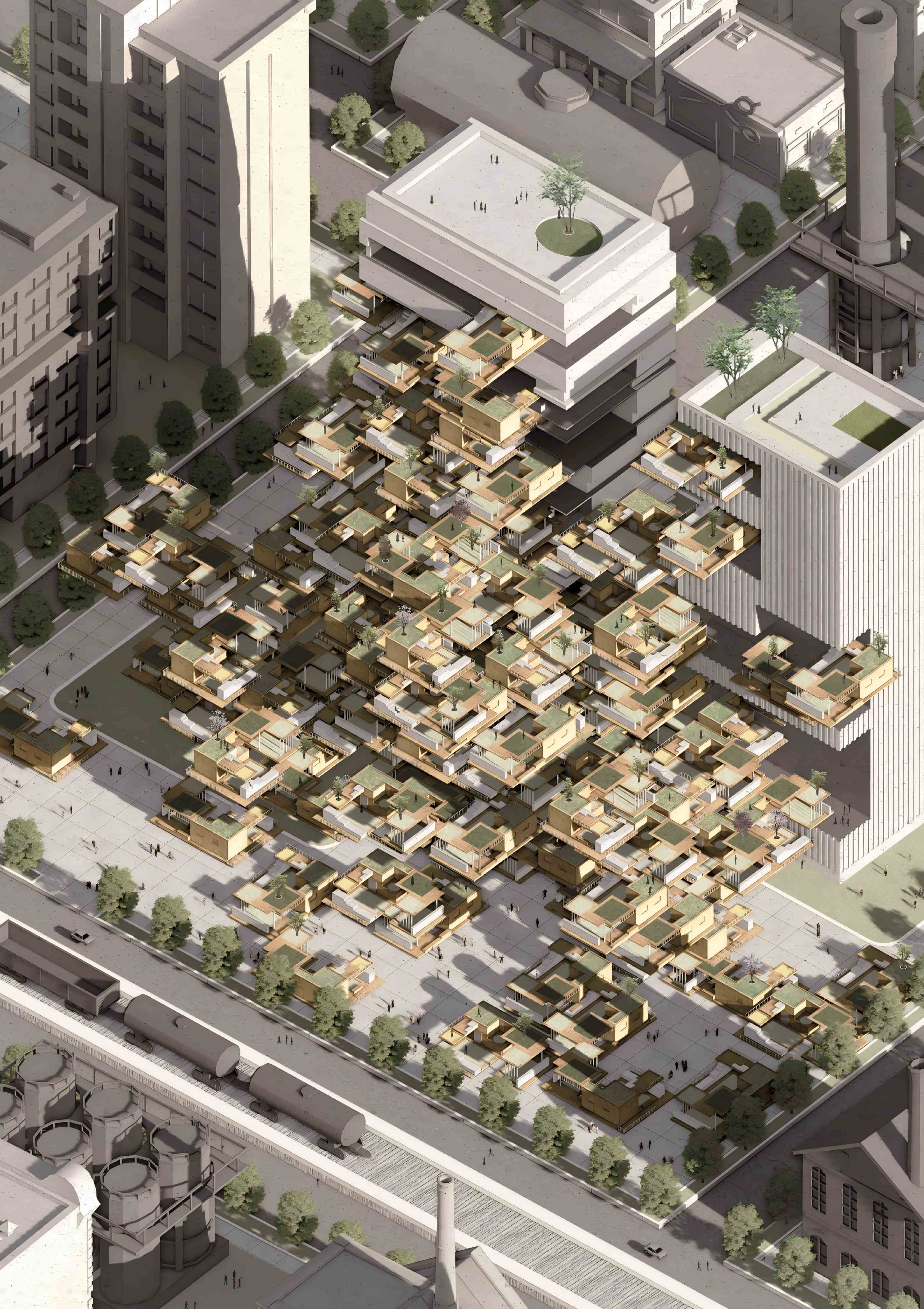
- "Parasitic" Spatial Intervention: These modular units can either stand independently or "parasitize" the existing steel skeletons. The juxtaposition of light timber against heavy steel, and modular precision against weathered industrial frames, creates a powerful aesthetic and narrative tension.
The Sustainable Time-City
The Ansteel Renovation Plan transcends the limits of static design, proving that industrial heritage can serve as a fertile ecological foundation. By synergizing natural growth with modular tectonics, the project offers a new paradigm for the transformation of industrial cities—one that balances environmental responsibility with a deep sense of historical memory.
Project Documentation